Outdoor Lighting Installation: Key Electrical Considerations for Safer Properties
Safe outdoor lighting installation depends on proper wiring, weatherproof fixtures, correct voltage selection, and dedicated circuits. JP Electric and Son, a trusted provider of commercial electrician services in Fitchburg, MA, helps property owners plan layouts that protect against shock hazards, moisture damage, and electrical overload while improving visibility and curb appeal.
Outdoor lighting does more than make a property look attractive at night. It protects walkways, deters intruders, and highlights the value of your home or business. But when outdoor electrical work is done incorrectly, it can create serious safety risks.
That is why property owners across Fitchburg, MA, rely on JP Electric and Son for commercial electrician services and home electrical repair services that are built around safety first.
This guide breaks down the key electrical considerations every property owner should understand before installing outdoor lighting.
Why Does Outdoor Lighting Require Special Electrical Planning?
Outdoor electrical systems face challenges that indoor wiring never encounters.
Rain, snow, temperature swings, and direct sun exposure all put extra strain on wiring and fixtures. A licensed Fitchburg electrician accounts for these factors from the very first planning stage.
Key reasons outdoor lighting needs specialized planning include:
- Exposure to moisture, which increases the risk of short circuits
- Temperature fluctuations that can damage wiring insulation over time
- Soil conditions that affect how deep cables should be buried
- Foot traffic and landscaping equipment that can disturb buried lines
What Voltage Is Safest for Outdoor Lighting?
One of the first decisions in any outdoor lighting project is choosing the right voltage system.
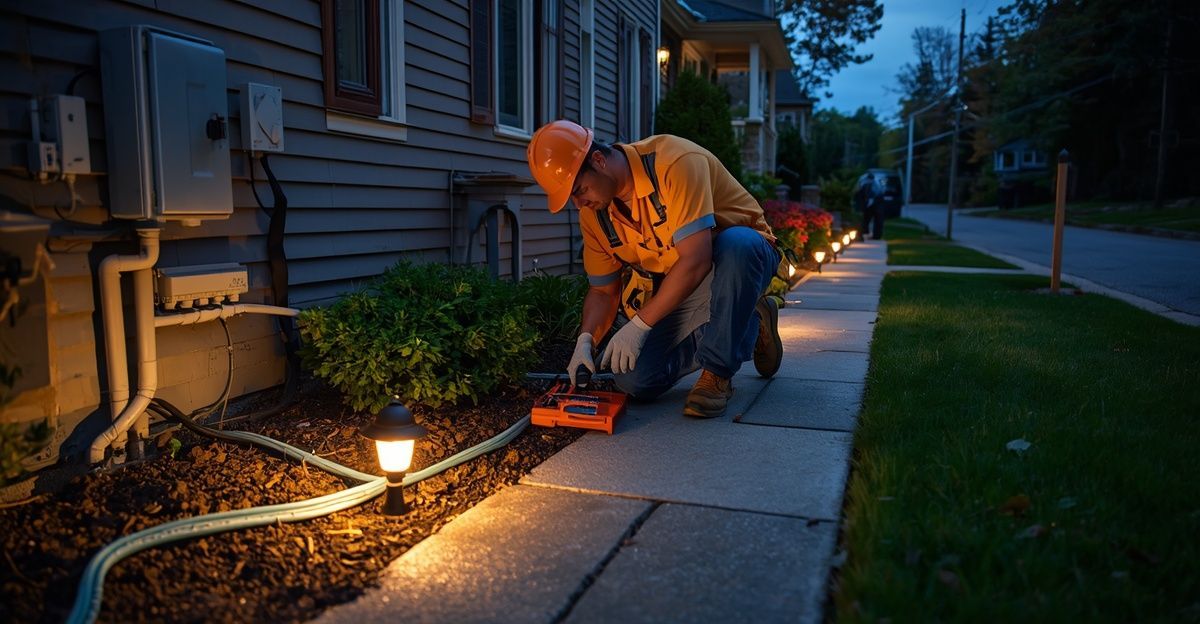
Low voltage lighting, typically twelve volts, is often recommended for pathways, gardens, and accent lighting because it reduces shock risk significantly.
Line voltage systems, on the other hand, are better suited for security lighting, floodlights, and larger commercial properties that need stronger illumination.
Consider the following when selecting voltage:
- Low voltage systems are safer for areas near pools, play spaces, or high foot traffic
- Line voltage systems deliver brighter output for larger commercial spaces
- A qualified residential electrician service can evaluate your property and recommend the right fit
How Deep Should Outdoor Electrical Wiring Be Buried?
Burial depth is one of the most overlooked safety factors in outdoor lighting installation.
National electrical code guidelines set minimum burial depths based on the type of cable and the voltage running through it. Burying wiring too shallow increases the risk of damage from shovels, aeration equipment, or shifting soil.
General depth guidelines include:
- Low-voltage lighting cable often requires a shallower trench than line voltage wiring
- Line voltage circuits typically need deeper burial and protective conduit
- Areas under driveways or patios require additional protection regardless of voltage
A professional electrician in Fitchburg, MA, whom property owners trust will confirm the correct depth for your specific project and soil type.
What Fixtures and Materials Prevent Weather Damage?
Not every light fixture is built to survive outdoor conditions. Choosing the wrong materials can lead to corrosion, water intrusion, and premature fixture failure.
Look for these qualities when selecting outdoor fixtures:
- An ingress protection rating suited for rain, snow, or direct water exposure
- Corrosion-resistant housing such as brass, copper, or coated aluminum
- Sealed wiring connections designed specifically for underground or wet locations
- UL listing for outdoor use
Choosing properly rated materials from the start prevents costly repairs down the road and keeps your property safer year-round.
Should Outdoor Lighting Run on a Dedicated Circuit?
Running outdoor lighting on a dedicated circuit helps prevent overload and reduces the risk of tripped breakers inside the home or business.
Dedicated circuits also make it easier to troubleshoot problems without affecting indoor power. This is especially important for commercial properties with extensive lighting needs.
Benefits of a dedicated circuit include:
- Reduced risk of overloading shared circuits
- Easier diagnosis when a fixture or section of lighting fails
- Better protection for sensitive equipment connected to separate circuits
A commercial electrician services provider can determine whether your property needs one dedicated circuit or several, depending on the size and layout of the lighting system.
Why Does GFCI Protection Matter for Outdoor Lighting?
Ground-fault circuit interrupters, commonly known as GFCI outlets, are required for most outdoor electrical installations. They shut off power instantly if a ground fault is detected, which significantly reduces the risk of electrical shock.
Outdoor GFCI protection is especially important near:
- Pools, hot tubs, and water features
- Walkways and entry points exposed to rain
- Any outlet used for seasonal or holiday lighting
Skipping GFCI protection is one of the most common and dangerous mistakes property owners make when installing outdoor lighting themselves.
Hiring the Right Team for Outdoor Lighting Installation
Outdoor lighting installation involves far more than placing a few fixtures around the yard. It requires an understanding of electrical code, voltage selection, burial depth, and weather-resistant materials.
JP Electric and Son has spent more than thirteen years delivering commercial electrician services and home electrical repair services throughout Fitchburg, MA, and the surrounding region. The team plans every project around safety, efficiency, and long-term reliability, so your property stays protected and beautifully lit for years to come.
If your home or business needs expert outdoor lighting installation,
reach out to JP Electric and Son today and let their experienced team design a lighting plan built for both safety and style.