Why Service Panel Upgrades Are Becoming Essential for Modern Homes

April 17, 2026

Why Service Panel Upgrades Are Becoming Essential for Modern Homes

Modern homes rely on electricity more than ever before. From smart devices and high-powered appliances to electric vehicles and home offices, the demand on residential electrical systems has increased significantly over the past decade. While many homeowners focus on visible upgrades like lighting or appliances, one critical component often gets overlooked: the service panel.


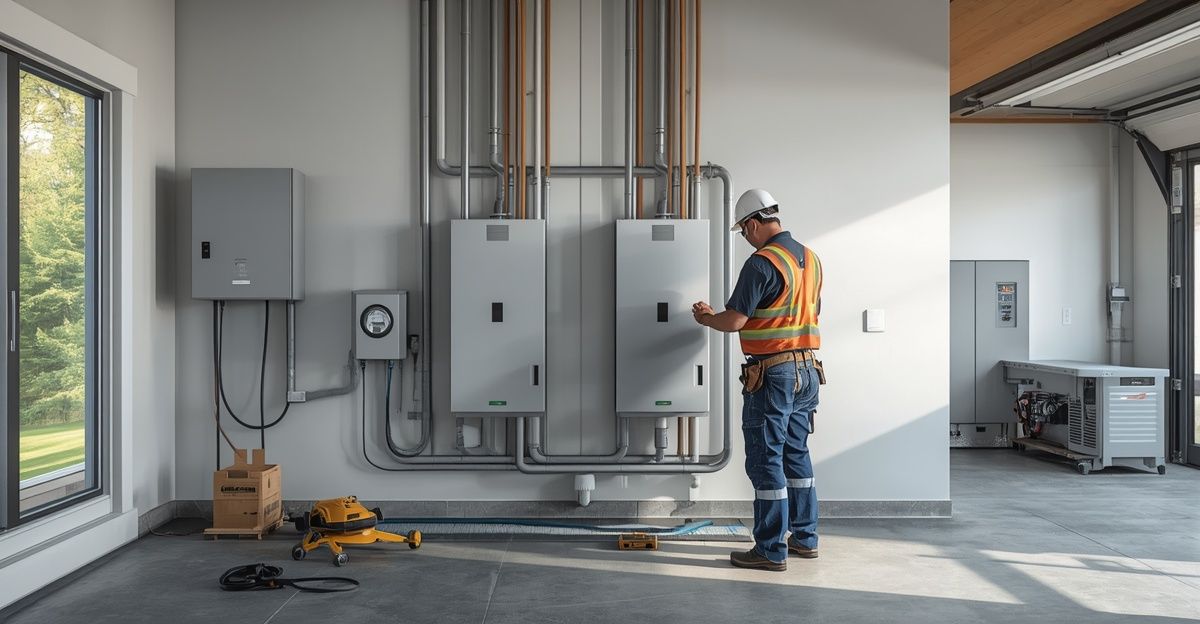
The service panel, sometimes called the breaker box, is the heart of your home’s electrical system. It distributes power to every room and device. As technology evolves and energy needs grow, older panels may struggle to keep up. This is why service panel upgrades are no longer optional in many cases. They are becoming essential for safety, efficiency, and long-term reliability.


Understanding What a Service Panel Does


Your service panel connects your home to the main power supply. It regulates how electricity flows through circuits and protects your system by shutting off power when there is an overload or fault.


In simple terms, it acts as both a traffic controller and a safety guard. Without a properly functioning panel, your entire electrical system is at risk.

Older homes often have panels designed for much lower energy usage. Decades ago, homes typically operated on 60 to 100 amps. Today, most modern households require at least 200 amps to support everyday needs.


Why Older Panels Are No Longer Enough


Technology has transformed the way we live. Think about how many devices you use daily compared to ten or twenty years ago. Televisions, laptops, air conditioners, microwaves, and chargers all draw power at the same time.


Here are a few reasons older panels fall short:


  • Limited capacity for modern appliances
  • Increased risk of overheating and circuit overload
  • Lack of compatibility with newer electrical systems
  • Frequent breaker trips due to excess demand


If your home still runs on an outdated panel, you may already notice signs like flickering lights or breakers that trip often. These are not just inconveniences. They are warning signs.


The Growing Demand for Electricity in Modern Homes


Electricity usage in homes has steadily increased. According to the U.S. Energy Information Administration, the average household consumes more electricity today than in previous decades due to larger homes and more electronic devices.


Some key contributors include:


  • Smart home systems and automation
  • Electric vehicle charging stations
  • High-efficiency HVAC systems
  • Home entertainment setups
  • Remote work equipment


Each of these adds pressure to your electrical system. Without an upgraded panel, your home may not handle these demands safely.


Safety Concerns You Should Not Ignore


One of the most important reasons to upgrade your service panel is safety. Electrical issues are a leading cause of house fires, and outdated panels significantly increase that risk.


Common safety risks include:


  • Overloaded circuits that overheat
  • Faulty breakers that fail to trip
  • Outdated wiring connections
  • Panels that cannot handle surge loads


Some older panel brands are also known for safety issues and may not meet current electrical codes. Replacing them can reduce the risk of electrical hazards and bring your home up to modern standards.


Working with a qualified residential electrician in MA ensures that upgrades are completed safely and in compliance with local regulations.


Supporting Modern Appliances and Technology


New appliances are designed for efficiency, but many still require stable and sufficient power. A service panel upgrade ensures that your home can support these systems without interruptions.


Consider the following:


  • Electric ranges and ovens require dedicated circuits
  • EV chargers demand high amperage capacity
  • Tankless water heaters rely on consistent power supply
  • Smart systems need stable connections to function properly


Without the right panel, you may not be able to install or fully use these upgrades.


Increasing Home Value and Appeal


Homebuyers today are more informed and often look beyond surface features. A modern electrical system is a strong selling point.


Upgrading your service panel can:


  • Increase your home’s resale value
  • Make inspections smoother during a sale
  • Appeal to buyers who want move-in-ready homes
  • Support future upgrades without additional work


In competitive markets, even small infrastructure improvements can make a big difference.


Signs That You May Need a Panel Upgrade


Not every homeowner knows when it is time for an upgrade. However, there are clear signs that indicate your panel may be outdated or struggling.


Watch for these indicators:


  • Frequent breaker trips
  • Flickering or dimming lights
  • Burning smells near the panel
  • Limited space for adding new circuits
  • Use of multiple extension cords or power strips


If you notice any of these, it may be time to consult a professional offering home electrical repair services to assess your system.


Preparing for Future Energy Needs


Energy trends are shifting quickly. Renewable energy systems, battery storage, and electric vehicles are becoming more common.


A modern service panel prepares your home for these changes. It allows for:


  • Solar panel integration
  • Energy-efficient upgrades
  • Smart energy management systems
  • Increased electrical capacity for future additions


Upgrading now can save time and money later by avoiding repeated modifications.


The Role of Professional Electricians


Service panel upgrades are complex and require professional expertise. This is not a DIY project. It involves working with high-voltage systems and ensuring compliance with strict safety codes.


A trusted electrician in Massachusetts can:


  • Evaluate your current system
  • Recommend the right panel size
  • Handle permits and inspections
  • Ensure safe installation


Choosing experienced professionals like JP Electric and Son ensures that the work is done correctly the first time.


Energy Efficiency and Cost Savings


While a panel upgrade is an investment, it can lead to long-term savings. A properly functioning system reduces energy waste and prevents costly repairs.


Benefits include:


  • Improved energy distribution
  • Reduced risk of equipment damage
  • Lower maintenance costs over time
  • Better performance of energy-efficient appliances


In many cases, the upgrade pays for itself through improved efficiency and fewer issues.


Customizing Electrical Systems for Your Lifestyle


Every home is different. Some families need extra capacity for home offices, while others may prioritize outdoor lighting or entertainment systems.


A panel upgrade allows for customization, including:


  • Dedicated circuits for high-demand devices
  • Room for future expansions
  • Integration with smart home systems
  • Improved overall system organization


Working with an electrician near Fitchburg, MA can help tailor your electrical setup to match your lifestyle and future plans.


A Smarter Approach to Home Improvement


Home improvement is not just about appearance. It is also about creating a safe, efficient, and reliable living environment.


Upgrading your service panel is one of the most practical improvements you can make. It supports everything else in your home, from lighting to appliances.


Instead of waiting for problems to arise, taking a proactive approach can prevent disruptions and ensure peace of mind.


Take the Next Step Toward a Safer Home


If your home’s electrical system feels outdated or struggles to keep up with your needs, it may be time to consider a service panel upgrade. This single improvement can enhance safety, support modern living, and prepare your home for the future.


JP Electric and Son is here to help you make that transition smoothly and confidently. Their experienced team understands the unique needs of modern homes and provides reliable solutions you can trust.


To explore reliable electrical solutions for your home or business, including professional commercial electrician services in MA, visit JP Electric & Son and schedule a consultation today.

By 66b4f57f3d24d70008ec672b July 7, 2026
Renovation projects are exciting until the unexpected costs start piling up. One of the most overlooked reasons projects go over budget? Poor electrical planning. Homeowners who invest in professional home electrical repair services from the start consistently see faster timelines, cleaner results, and fewer costly surprises along the way.  At JP Electric and Son, Inc. , proper planning is not an afterthought. It is the foundation of every project they take on. Why Electrical Planning Matters Before Renovation Begins Most renovation delays trace back to one thing: decisions made too late. Electrical work that is not planned in advance disrupts timelines, forces rework, and creates avoidable expenses. Professional planning eliminates that chaos before it starts. What Happens Without a Clear Electrical Plan? Contractors work around incomplete wiring, slowing the entire job Inspections get delayed due to code violations Homeowners pay more for emergency fixes mid-project The final result often requires follow-up work What Professional Planning Prevents Unnecessary material waste Permit and inspection setbacks Scheduling conflicts between trades Costly last-minute changes to panel capacity or circuit loads How JP Electric and Son, Inc. Approaches Project Planning JP Electric and Son, Inc. has spent over 13 years working directly with homeowners and businesses across Eastern New England. Their process is built on one core principle: think ahead, always. They do not show up and figure it out on-site. Every project starts with a thorough inspection, a written quote, and a sit-down consultation with the client. Step 1: Inspection and Root Cause Analysis Before any work begins, the team inspects not just the reported issue but the full electrical system behind it. Circuit breakers and panel capacity are reviewed Underlying wiring problems are identified early Potential code compliance issues are flagged before they become problems Step 2: Consultation and Cost-Effective Planning After the inspection, clients receive a written quote and a real conversation about options. No pressure, no "my way or the highway" approach Clients are guided through cost-effective solutions that fit their budget Scheduling is built around the client's timeline, not just the contractor's availability Step 3: Execution With Precision Once the plan is set, the work moves quickly and cleanly. Jobs are completed on time, with no loose ends The team travels fully equipped, so no delays are waiting on parts Quality is never sacrificed for speed The Real Cost of Skipping Professional Electrical Planning Cutting corners on electrical planning feels like savings upfront. It rarely stays that way. Renovation projects that skip professional assessment often face: Panel upgrades that were not budgeted Failed inspections that require permit resubmission Rewiring sections already covered by drywall Fire hazards from outdated or overloaded circuits JP Electric and Son, Inc. has handled all of these situations, often as emergency calls from homeowners who tried to shortcut the process. The repair cost is almost always higher than what proper planning would have cost from the start. Residential and Commercial Electrical Services Built for Every Project Renovation needs differ significantly between homes and businesses. JP Electric and Son, Inc. provides both residential electrician service and commercial electrician services, tailored to the scope and demands of each project. For Homeowners Residential renovations, finished basements, kitchen remodels, and new additions all require careful electrical coordination. As a trusted Fitchburg electrician, the JP Electric and Son team helps homeowners plan circuits, upgrade panels, install outlets, and ensure every new space is fully code-compliant. Knob and tube wiring replacement EV charger installation Generator setup and service Panel upgrades and service changes For Business Owners Commercial projects carry added complexity. Multiple trades, tighter schedules, and stricter code requirements make professional planning even more essential. Commercial fit-ups and build-outs Restaurant electrical installations Ongoing maintenance contracts Code compliance reviews As a reliable electrician that Fitchburg MA businesses turn to repeatedly, JP Electric and Son, Inc. has completed 32 commercial fit-ups and 8 full restaurant installations, with a track record built entirely on repeat clients and referrals. What Sets JP Electric and Son, Inc. Apart There are plenty of electricians available. Not all of them bring the same combination of planning discipline, technical expertise, and client-first communication. Here is what makes the difference: 13+ years of experience serving residential, commercial, and industrial clients Licensed in Massachusetts, Vermont, and New Hampshire Factory Authorized Generac dealer for generator sales and service Unconditional satisfaction guarantee on every job Professional estimating and project management built into every engagement The numbers back it up: 126,746 square feet of homes rewired, 3,956 service changes completed, and 1,378 EV chargers installed across the region. Start Your Renovation the Right Way Electrical planning is not a formality. It is the difference between a renovation that runs smoothly and one that drains your budget and tests your patience. If you are planning a home renovation or commercial build-out in the Fitchburg area, JP Electric and Son, Inc. is ready to walk through the project with you from day one. Their team provides expert home electrical repair services with the planning, communication, and execution that protects your investment at every stage. Get in touch with JP Electric and Son, Inc. today and request your free estimate. The sooner the planning starts, the smoother your project runs.
By 66b4f57f3d24d70008ec672b July 7, 2026
Fuse boxes and circuit breakers both protect your home's electrical system, but circuit breakers are safer, more convenient, and meet modern electrical demands. Most homeowners today are making the switch, and for good reason.  Most people never think about their electrical panel until something goes wrong. A tripped breaker, a blown fuse, a flickering light. Suddenly, you're standing in the dark wondering what your home's electrical system is actually capable of handling. If your home still runs on a fuse box, you're not alone. Millions of older homes across Massachusetts still rely on them. But as electrical demands grow and safety standards evolve, many homeowners are asking the same question: should I upgrade to a circuit breaker panel? This guide breaks down exactly what each system does, how they differ, and why so many homeowners are choosing to make the switch. What Is a Fuse Box and How Does It Work? A fuse box is an older type of electrical panel that uses fuses to protect your home's circuits. Each fuse contains a thin metal wire that melts when too much current passes through it. That melted wire breaks the circuit and stops the flow of electricity, protecting your wiring from overheating. Key characteristics of fuse boxes: Common in homes built before the 1960s Each fuse is a one-time-use component Must be physically replaced after blowing Typically limited to 60 to 100 amps of total capacity Fuse boxes did their job well for decades. The problem is that modern homes demand far more power than they were ever designed to handle. What Is a Circuit Breaker Panel? A circuit breaker panel serves the same basic purpose as a fuse box. It protects your home's wiring by interrupting electrical flow when a circuit is overloaded. The key difference is in how it responds and resets. Instead of burning out a fuse, a circuit breaker trips a switch. Once the issue is resolved, you simply flip the breaker back on. No replacement needed. Key characteristics of circuit breakers: Standard in homes built after the 1960s Reusable, simply reset after tripping Available in capacities of 100, 150, and 200 amps or more Easier to identify and isolate a problem circuit Compatible with modern AFCI and GFCI protection technology Circuit breakers are the standard for a reason. They offer reliability, convenience, and a much higher ceiling for electrical capacity. Fuse Box vs. Circuit Breaker: A Direct Comparison Safety Both systems protect against overloads, but circuit breakers do it more consistently. With fuse boxes, homeowners sometimes install the wrong fuse size. A 30-amp fuse in a 15-amp circuit, for example, allows dangerous levels of current to pass through without interruption. That's a fire risk. Circuit breakers are harder to misuse. They are rated to the circuit they protect and trip automatically at the right threshold. Safety advantages of circuit breakers: Consistent, automatic protection at rated amperage Compatible with arc-fault protection (AFCI breakers) Ground-fault interruption (GFCI) available at the panel level Less risk of user error during reset Capacity and Modern Demands The average American home in the 1950s used about 3,000 watts of electricity. Today, that number is often 10 times higher, with EV chargers, home offices, smart appliances, and central air systems all drawing power simultaneously. Fuse boxes simply were not designed for this. Modern homes typically need: At least 200-amp service for full household demand Dedicated circuits for HVAC, EV chargers, and kitchen appliances Room for future additions and upgrades A fuse box maxes out at 60 to 100 amps in most cases. That ceiling creates real problems for growing households. Convenience Blown a fuse at 11 PM? You need a replacement on hand, the right amperage, and a flashlight. Tripped a breaker? You walk to the panel and flip a switch. The convenience gap is real, and for most homeowners, it matters. Why Are So Many Homeowners Making the Switch? Insurance and Code Requirements Many home insurance providers charge higher premiums for homes with fuse boxes. Some refuse to insure them at all, particularly older panels with known issues like Federal Pacific or Zinsco equipment. In Massachusetts, certain renovations and additions also require electrical upgrades to meet current code. A commercial electrician service or residential electrician can assess what applies to your specific situation. Selling Your Home Buyers and their inspectors notice outdated electrical panels. A fuse box can flag your home as a liability during a sale, leading to renegotiated prices or required repairs before closing. Upgrading before listing eliminates that friction. Growing Electrical Needs Adding an EV charger? Installing central AC? Finishing a basement? Each of these projects adds load to your electrical system. A fuse box often cannot accommodate the additional circuits safely. A panel upgrade done by a qualified electrician Massachusetts trusts is typically the first step in any major home improvement project. Signs It's Time to Replace Your Fuse Box Not sure if your panel needs attention? Here are the most common warning signs: Fuses blow frequently or repeatedly on the same circuit You notice burning smells near the panel Lights flicker or dim when appliances turn on Your panel is original to a home built before 1970 You cannot add new circuits without overloading existing ones Your insurance company has flagged the panel If any of these sound familiar, it's time to talk to a professional. What the Upgrade Process Looks Like Upgrading from a fuse box to a circuit breaker panel is a straightforward job for a licensed electrician, though it does require a permit and inspection in Massachusetts. A qualified electrician near Fitchburg, MA will typically: Assess your current system and load requirements Pull the necessary permits Install the new panel and transfer circuits Coordinate the utility shutoff and reconnection Schedule the required inspection The process usually takes one full day for a standard residential upgrade. Homes with more complex wiring or larger square footage may take longer. How JP Electric and Son, Inc. Handles Panel Upgrades JP Electric and Son, Inc. has been delivering trusted home electrician services and commercial electrician services across Eastern New England for over 13 years. The team has completed nearly 4,000 service changes and rewired over 126,000 square feet of residential space. Every panel upgrade starts with a thorough inspection and a written quote. No surprises, no pressure. Whether you need an affordable electrician Fitchburg MA residents rely on, or a full-scale commercial upgrade, JP Electric and Son builds a plan around your schedule, budget, and goals. Their approach emphasizes proper planning from the start, which saves time, reduces costs, and ensures the work meets Massachusetts electrical code. Past clients say it best: "They did what they said they'd do in the time that they said they would do it. Price was fair." That kind of consistency is exactly what electrical work demands. Make the Smart Switch & Contact JP Electric and Son, Inc. An outdated fuse box is not just inconvenient. It can limit your home's value, raise your insurance costs, and create real safety risks for your family. Upgrading to a circuit breaker panel is one of the most practical investments a homeowner can make. And with the right team behind it, the process is smooth, code-compliant, and built to last. JP Electric and Son, Inc. offers residential electrician service and commercial electrician service across Fitchburg, MA, and the surrounding region. If you want to know exactly what your home needs, reach out today and request a free estimate. A live person always answers the call.
Commercial Build-Outs Explained
June 8, 2026
Learn what business owners should know about electrical planning for commercial build-outs, from power needs and code compliance to future-ready system design.
Electrical installation for a backyard pool and hot tub
June 8, 2026
Installing a pool, hot tub, or outdoor features? Learn essential electrical safety, code, and wiring considerations to keep your outdoor space safe and reliable.
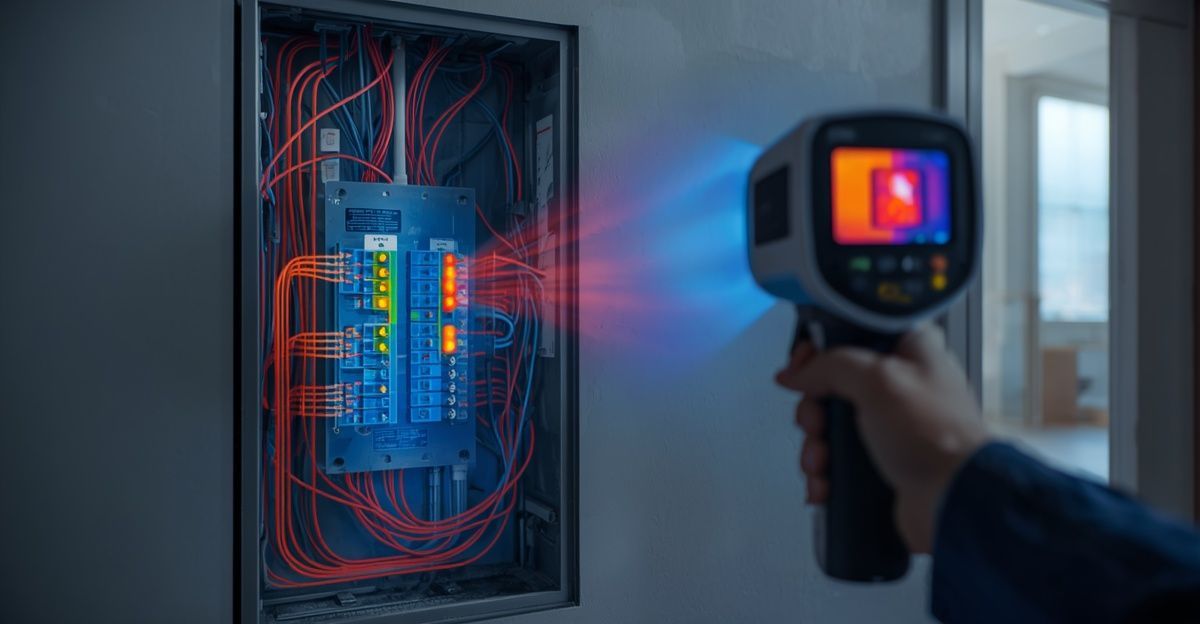
How Infrared Thermography Finds Hidden Electrical Issues
May 5, 2026
Learn how infrared thermography detects hidden electrical issues, prevents fires, reduces repair costs, and improves system safety in homes and buildings. Read more.
Electrical Planning for New Construction Homes
May 4, 2026
Learn what homeowners often overlook in new construction electrical planning, from panel capacity and outlet placement to smart home wiring and safety. Read more.
Generator Installation Guide
April 20, 2026
Discover how infrared thermography inspections identify hidden electrical problems early, helping prevent failures, fire hazards, and costly repairs. Read more.
From Knob-and-Tube to Modern Wiring
March 9, 2026
Learn what happens during a full home rewire, from replacing knob and tube wiring to modern upgrades that improve safety, efficiency, and electrical performance.
Installing a home EV charger
March 9, 2026
Ensure your home is ready for an EV charger. Learn key checks for electrical capacity, panel upgrades, safety, and installation requirements before you begin.
Benefits of Preventative Electrical Maintenance
February 6, 2026
Keep your business safe and efficient with preventative electrical maintenance. Reduce downtime, avoid costly repairs, and ensure reliable performance year-round.